The digital realm has always been a reflection of our physical world, but as we approach 2025, the lines are blurring at an unprecedented rate. The term “metaverse” has been buzzing around, and if you’ve been keeping your ear to the ground, you’d know it’s not just another tech jargon. It’s the future. But before you form half-baked opinions from WhatsApp forwards or get swayed by flashy REELS, let’s dive deep into what the metaverse truly holds for our boardrooms.
The Metaverse: More Than Just a Digital Playground
For the uninitiated, the metaverse is a collective virtual shared space, created by the convergence of virtually enhanced physical reality and physically persistent virtual reality. In simpler terms, it’s where our digital and physical realities intertwine. But it’s not just about gaming or social interactions; it’s about reshaping the very fabric of corporate interactions.
Boardroom 2.0: The Metaverse Edition
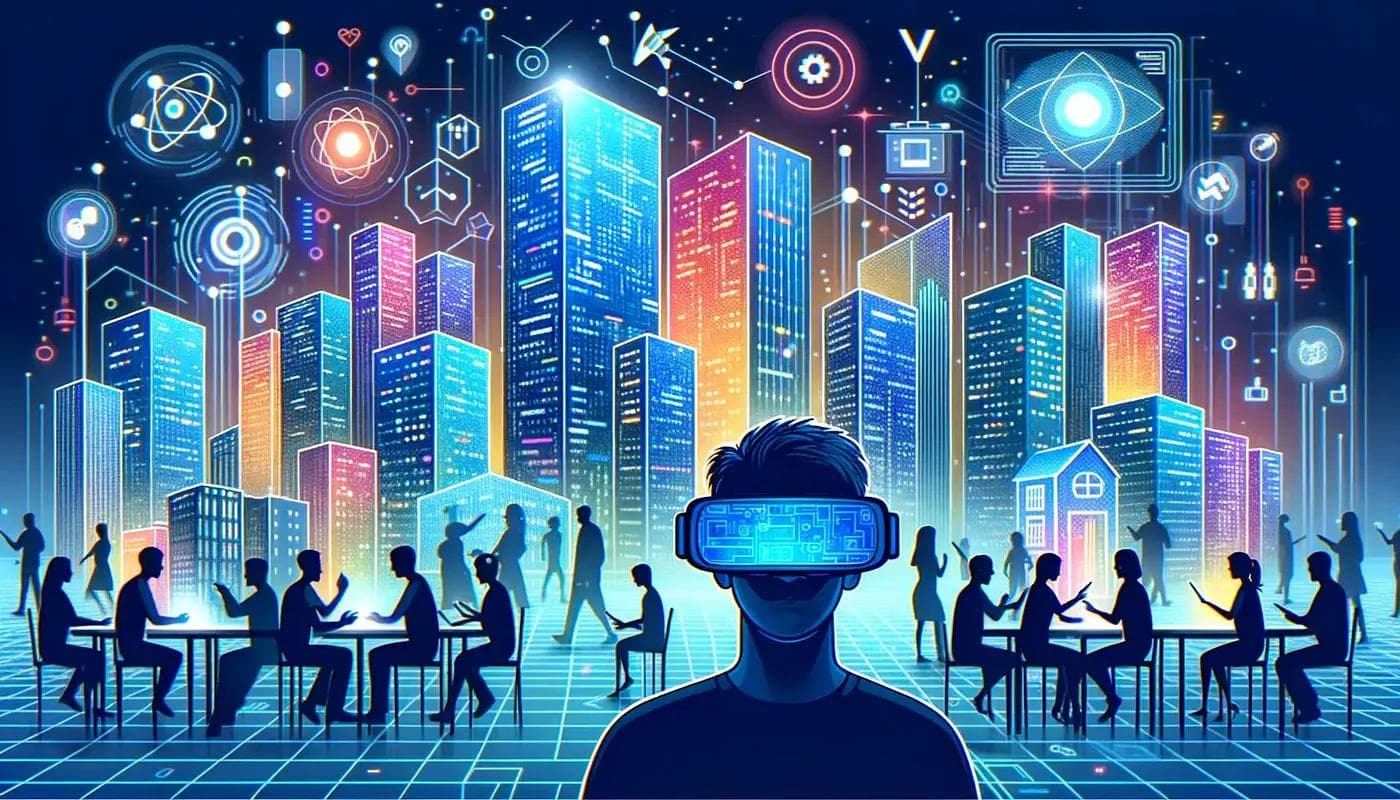
Imagine a boardroom meeting where stakeholders from across the globe can interact as if they’re in the same room. No more pixelated video calls or audio lags. Instead, lifelike avatars discuss, debate with passion, and make decisions in a virtual space that mimics the physical world. The metaverse promises this and much more.
Predictions and Possibilities
Certainly! Let’s delve deeper into each of these points, providing detailed explanations and examples:
1. Holistic Collaboration
The metaverse offers a platform that transcends traditional digital communication tools. Instead of flat screens and 2D presentations, the metaverse provides a 3D space where participants can interact with data, ideas, and each other in a more immersive manner.
Example: Imagine a team of architects and engineers from different parts of the world collaborating on a new building project. In the metaverse, they can walk through a 3D model of the building, making real-time adjustments. An architect in Paris might adjust a wall’s position, while an engineer in Tokyo immediately examines the structural implications. All of this happens in a shared virtual space, eliminating the need for physical models or back-and-forth email chains.
2. Enhanced Training
Training in the metaverse can replicate real-world scenarios, providing a hands-on learning experience without the constraints of physical location or resources.
Example: A global retail chain wants to train its staff on a new point-of-sale system. Instead of sending trainers to each location or relying on video tutorials, employees can enter a virtual store in the metaverse. Here, they interact with the new system, handle virtual customers, and even deal with simulated challenges — all under the guidance of a virtual instructor.
3. Real-time Data Visualization
The metaverse can transform static charts and graphs into interactive 3D visualizations, allowing for a more in-depth and intuitive understanding of complex data.
Example: A multinational company is reviewing its annual performance. In the metaverse boardroom, executives don’t just see a bar chart; they walk through a virtual city where each building represents a department, its height indicates profit, and its color shows efficiency. They can dive into each building, exploring floors (quarters of the year) and rooms (specific projects) to analyze data at a granular level.
4. Cultural Integration
The metaverse can serve as a cultural melting pot, allowing employees from diverse backgrounds to share and understand each other’s cultures, fostering unity and mutual respect.
Example: A company with offices in India, Brazil, and Germany organizes a virtual cultural fair in the metaverse. Employees create stalls showcasing their local festivals, foods, and traditions. An employee in Brazil can virtually taste Indian Diwali sweets or participate in a German Oktoberfest dance, fostering a deeper appreciation for their colleagues’ backgrounds.
5. Sustainable Operations
The metaverse can drastically reduce the need for physical resources, from travel to paper, leading to more eco-friendly business operations.
Example: Consider a global tech conference. Instead of thousands of attendees flying to a location, leading to significant carbon emissions, hotel bookings, and physical resources, the conference takes place in the metaverse. Attendees from around the world log in, attend virtual sessions, network in digital lounges, and even enjoy virtual entertainment, all from the comfort of their homes. The environmental footprint is minimal, but the engagement and value remain high.
A Word of Caution
While the possibilities are endless, it’s crucial to approach the metaverse with a sense of responsibility. As with any technology, there are ethical implications to consider. How do we ensure data privacy in such an interconnected realm? How do we prevent the misuse of this technology? These are questions we must ponder upon.
Final Thoughts
The metaverse is not a fleeting trend; it’s the next step in our technological evolution. As we stand at the cusp of 2025, the fusion of our digital and physical realities is inevitable. But remember, while technology provides the tools, it’s up to us to use them wisely. So, before you dive headfirst into this new realm, READ, UNDERSTAND, and EMBRACE the change responsibly.